Workers’ compensation surveillance is triggered by specific red flags in a claim. These include injuries reported on Monday mornings, inconsistent stories, no witnesses, and delayed reporting. A history of claims, difficulty contacting the claimant, or refusal of medical treatment also raise suspicion. Investigators look for these signs to combat fraud, which costs businesses billions. Understanding these triggers helps employers and insurers identify potentially fraudulent claims and initiate professional, legal surveillance to verify their legitimacy.
A veteran truck driver claimed a career-ending brain injury from a workplace accident, seeking over a million dollars in disability benefits. But when inconsistencies emerged in his story, Gravitas Investigations was called in to uncover the truth. Through our proprietary OpenEye Search™ and a comprehensive Hospital Canvass spanning 60+ medical facilities across three states, our team discovered a hidden medical history that changed everything. This case study reveals how combining traditional investigative techniques with modern digital forensics exposed a calculated fraud attempt and saved our client from a seven-figure loss.
https://www.gravitasinv.com/wp-content/uploads/2025/11/featured_image-1.png10241536Adam Visnichttps://www.gravitasinv.com/wp-content/uploads/2020/02/Gravitas-Investigations-black-logo-cropped-300x57.pngAdam Visnic2025-11-21 08:28:002025-11-21 08:30:54The Ghost on the Highway: Uncovering a Million-Dollar Workers’ Comp Fraud
Insurance adjusters can detect workers’ compensation fraud by monitoring claimants’ social media for red flags. Key indicators include posts showing physical activity inconsistent with claimed injuries, evidence of working a second job, or travel. Analyzing public profiles for these signs helps build a case against fraudulent claims, saving insurers billions annually. Professional investigators can ensure evidence is collected legally and ethically.
https://www.gravitasinv.com/wp-content/uploads/2025/11/featured_image.png10241536Adam Visnichttps://www.gravitasinv.com/wp-content/uploads/2020/02/Gravitas-Investigations-black-logo-cropped-300x57.pngAdam Visnic2025-11-19 13:14:102025-11-19 13:14:10How Insurance Adjusters Can Spot Workers’ Comp Fraud on Social Media: 10 Red Flags You’re Missing
https://www.gravitasinv.com/wp-content/uploads/2025/08/ai_human_expertise_workers_comp_fraud.png10241536Adam Visnichttps://www.gravitasinv.com/wp-content/uploads/2020/02/Gravitas-Investigations-black-logo-cropped-300x57.pngAdam Visnic2025-08-11 15:22:042025-08-11 15:23:11The Unseen Hand: How AI and Human Expertise Uncover Workers Compensation Fraud
https://www.gravitasinv.com/wp-content/uploads/2022/03/I-went-undercover.jpeg10801920Adam Visnichttps://www.gravitasinv.com/wp-content/uploads/2020/02/Gravitas-Investigations-black-logo-cropped-300x57.pngAdam Visnic2022-03-01 11:13:382022-03-01 11:13:38I Went Undercover to Catch a Powerlifting Insurance Fraudster
https://www.gravitasinv.com/wp-content/uploads/2021/09/adamvisnic-Thumbnail-3.jpeg7201280Adam Visnichttps://www.gravitasinv.com/wp-content/uploads/2020/02/Gravitas-Investigations-black-logo-cropped-300x57.pngAdam Visnic2021-09-27 11:16:282022-11-11 12:20:48The Dos and Don’ts of Hiring a Private Investigator [VIDEO]
So, you’re a private investigator on a stakeout. It’s a bright, sunny day. You’re in your car in a fixed surveillance position, and your fraudulent Subject somehow becomes aware of you, and now your client is upset. Did you get burned because of your window tint?
The Setup
As a P.I., automotive window tints are a must – it keeps you out of view from neighbors, onlookers, and of course, your Subject. And, of course, it blocks visible light from entering your car’s interior.
But before slapping some on your windows, it’s important to know your state’s laws and general info.
Each state has laws for front, backside, rear windows, windshield, and reflectivity.
When you see data on window tint, you’ll see it categorized by percentage.
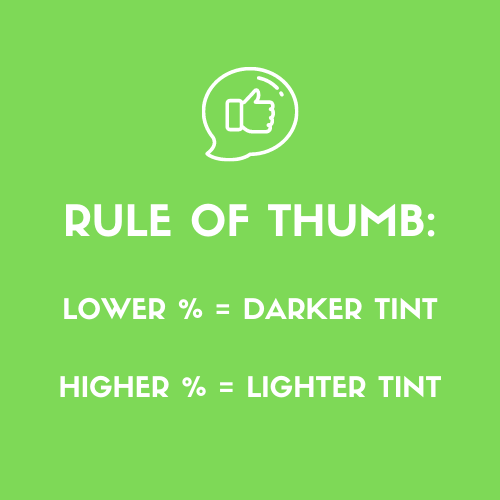
Here at Gravitas Investigations, we have a rule of thumb: The lower the percentage, the DARKER the tint, and the less sunlight can come into your car. The higher the percentage, the lighter the tint, and the more sun can come in.
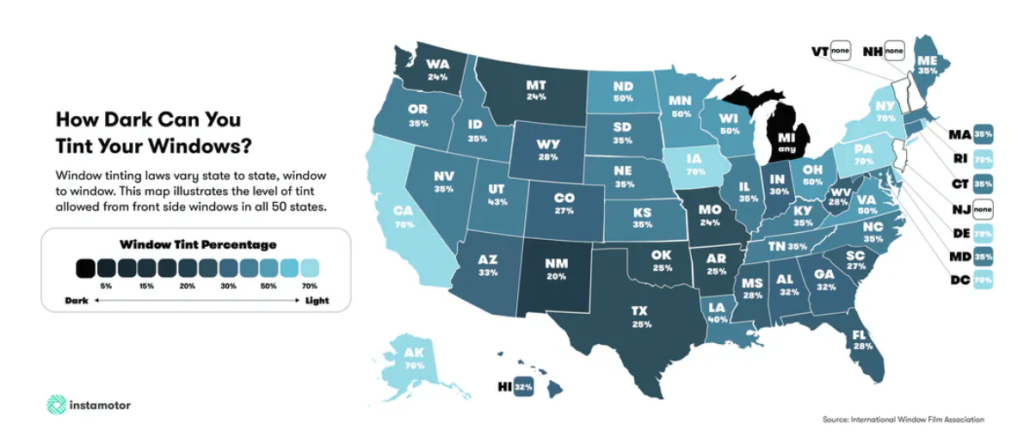
I went ahead and linked to the window tinting laws in all 50 states (click here)Here’s a handy little US map for the level of tint allowed from front side windows:
Let’s take Ohio, Kentucky, and Indiana, for example, the states where I’m licensed.
In Kentucky, the front side window must be 35%. This means you can’t have a tint that allows less than 35% of the rays on your front side window.
It’s 18% on both the rear side and rear back windows. So you can go darker tint there.
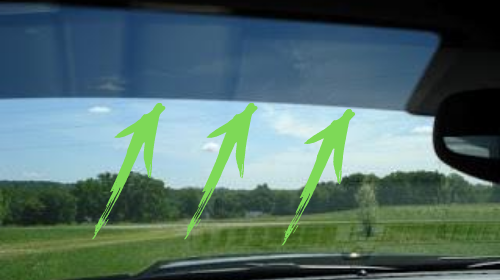
The windshield tint allows you to place a strip of tint to the top of the car manufacturer’s “AS-1” line. What is the as1 line?
The AS-1 line extends from the “AS-1” label on most motor vehicle windshields. An actual As1 label is found on the windshield and runs parallel to the top of the windshield or at about 5 inches.
Legal window tint in Ohio is at 50% on front side windows. But any level, even limo tint, is allowed on the rear side and rear back windows. So, we can go crazy there.
Indiana legal window tint is at 30%. Legal tint in Indiana for rear window tint is also 30%. Indiana window tint law also says 30% for side windows.
My two cents: if you can, get your rear side and back windows as dark as possible.
Especially if you have an SUV or minivan, when you add dark tint to the rear windows, they don’t seem to change the look of your car that much. That’s because most factory-made large vehicles come with a high level of rear tint as it is. But if you can match the front and back window tint, I tend to go that route.
It’s visually appealing, and it makes your car blend in well.
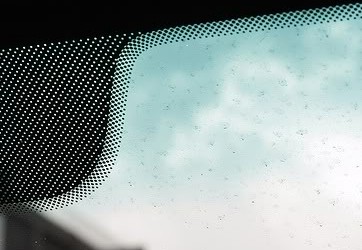
My cars also have had the 5” band across the top of the windshield. Though some installers won’t put it there if you have a “frit” band. Those tiny little dots around the edge of your windshield.
I avoid reflective tint because it stands out – it doesn’t blend in too well. I’m not against limo or blacked-out tinting. But if you’re parked for extended periods in your car in a suburban area, it might bring more attention than less.
When it comes to the law, though, I could receive a fine for my tint. I’d be willing to pay that fine. I’ve never been pulled over or cited in my 15 years of driving with an “illegal” tint. I chalk it up to the fact that police officers aren’t looking to cite someone for window tint. It’s a minor offense, and since so many already have it, it’s not worth it for them to stop me.
So, depending on how aggressive your local PD is, it’s up to you how “illegal” you want to tint your windows.
Also, some states allow exemptions. Under some state laws, private investigators can get exemptions on window tinting.
So check your local statutes and revised code for those details.
Quick Tips
Even though you have window tint, the sun can shine, exposing your silhouette.
#1 – Ensure you angle your car to avoid direct sun glare.
I always like to park with the sun at the back of my car if I can and not blasting through the front window. In cold months, the sun is low and can do that to you.
#2 –Find some shade wherever you park.
When I find a stationary spot and park on the street, I usually try to park where there is an overhanging tree. It doubles the effectiveness of your car’s tint and prevents visible light transmission.
#3 –I always have a front window shade to block out any sun coming in the front window and any onlookers.
I get shades that you can pop in and out quickly into your front windshield.
#4 –In a van or larger vehicle, sitting in the rear seats and using window curtains are huge too.
Passersby only pay attention to who is in the driver’s seat and don’t notice people in the back seat. Curtains block out any silhouette. Also, some minivans come stocked with mesh shades that pull up from the sliding door. So you may not even need curtains on the side windows.
#5 –If you’re renting a vehicle and don’t want to use your own to save on mileage, I always ask for an SUV or minivan.
They come stocked with factory-level side windshield tinting and back window shade. The front windows aren’t tinted, but I assume I’ll be sitting in the rear of the vehicle anyways.
Over to you…
What percentage do you have in your windows? Go ahead and assess automotive window tints for all your surveillance vehicles.
Have you ever been given a ticket for illegal window tint?
So, you’re a private investigator on surveillance and you got burned and you don’t know why. Was it because you drove past your Subject’s house too slowly?
The Setup
So, drive-by video. I learned this lesson early on in my career.
It became ingrained in my brain.
Why?
Because I was assigned to a two-person surveillance operation on workers’ compensation claimant in a rural area of Ohio. Like, we’re talking Amish country people. You’ve got horse and buggy, oxen plowing fields, and epic Amish beards.
But, the reason it was a two-man operation wasn’t that it was so rural, but because the previous investigative team (not from our firm) had been burned on it before.
So, our Claimant was already “heated up.”
And we knew why – the client had provided the previous report and video to us, so we knew what they had done wrong.
This Claimant lived on a country road, and the previous investigators had driven past the house too often, and, too slowly.
Eventually, the claimant, who had a residence with a huge bay window at the front of his house, caught on to the drive-bys.
I mean, he probably knew all his neighbors’ cars as it was, and seeing two cars he’d never seen before drive by every half-hour alerted him.
And this was all in the report – the claimant actually got into his own car and tailed the investigators out of the county.
The Problem
Look, I get it. When you first get onsite to a residence, your natural inclination is to a good establishing shot. You wanna get a shot of the house, the layout, note the plates and vehicles on-site, on top of any action that might be going on.
But that doesn’t mean driving along the road at normal speeds and then all of sudden, dropping it down to a crawl to get some drive-by footage.
That’s a disaster in the making.
So, I’m here to help.
The Fix
First, obviously, don’t ever drive by the house too slowly. There’s no reason for it.
When you do drive-bys, go at a normal speed every time. As if you were an average joe living in the area.
But when you’re shooting video, get the house in the frame early and pan left or right as you pass the house.
Also, while this is going on, zoom in at first and then zoom out wide as you pass by the house to frame everything up nicely.
It’ll take some practice to both stay on the road with one hand and pan and zoom with your camera hand.
The key is to keep it steady. Keep it level.
This isn’t shaky cam footage Jason Bourne.
If you wanna get really fancy you can get ahold of a window mount, one with a suction cup, and fix your camcorder or even a dash camera to the second-row window of your surveillance vehicle.
Press record, do the drive-by, and later edit out what’s unnecessary.
Second, especially in rural areas, limit your drive-bys to every hour or so.
You can certainly do drive-bys every half-hour, but only when you feel you need to.
Like if there have been multiple cars coming and going from the residential area, it’s lunchtime for the Claimant, or something similar.
And don’t just come back up the road in which you initially drove down. Give it time.
Driving by the house within a couple of minutes of each other is suspicious.
Instead, drive by the first time and “flank” back to your original surveillance position by going around the “block” assuming there’s another route to get to your original spot.
However, if the residence is in a hollow (like in Kentucky), like a no-outlet street, I’d limit my drive-bys to every two hours.
And, I know what you’re thinking – I could use drone footage or an unmanned surveillance camera hidden in a rock or safety cone to get static video.
Hold your horses, James Bond. That’s a video for another day.
For now, let’s just stick with the basics.
Third, hide your camera.
It may sound simple but what’s worked for me is to actually place my camera hand or monopod on the top of my left arm to stabilize and hide the camera.
I’ll do this if the residence is on my left side.
If the residence is on my right side, I’ll actually place my camera behind the passenger side headrest to get drive-by footage.
These simple methods help to prevent people from seeing my camera through my front windshield as I drive by.
This is me trying to be as casual as possible.
Lastly, and I can’t believe I have to say this but close your windows when filming drive-bys.
If you can’t get the footage because your windows are foggy or dirty, clean those things before getting onsite for crying out loud.
Overall, use the KISS method – keep it simple, stupid.
Drive by the residence like a normal person would (not too slowly!), limit drive-bys to every hour, hide your camera, and keep your windows up.
And, just in case you were wondering. Even with the knowledge of the previous investigation, we still couldn’t get much of anything on that Claimant in rural Ohio. But, at least he didn’t tail us.
Anybody wanna volunteer to take that case??
Over to you…
What ways can you prevent from getting burned?
Comment below.
https://www.gravitasinv.com/wp-content/uploads/2021/02/Youtube-Thumbnail-1.png7201280Adam Visnichttps://www.gravitasinv.com/wp-content/uploads/2020/02/Gravitas-Investigations-black-logo-cropped-300x57.pngAdam Visnic2021-02-24 14:22:252021-02-24 14:22:25The Reason You Got Burned: Driving By Too Slowly