
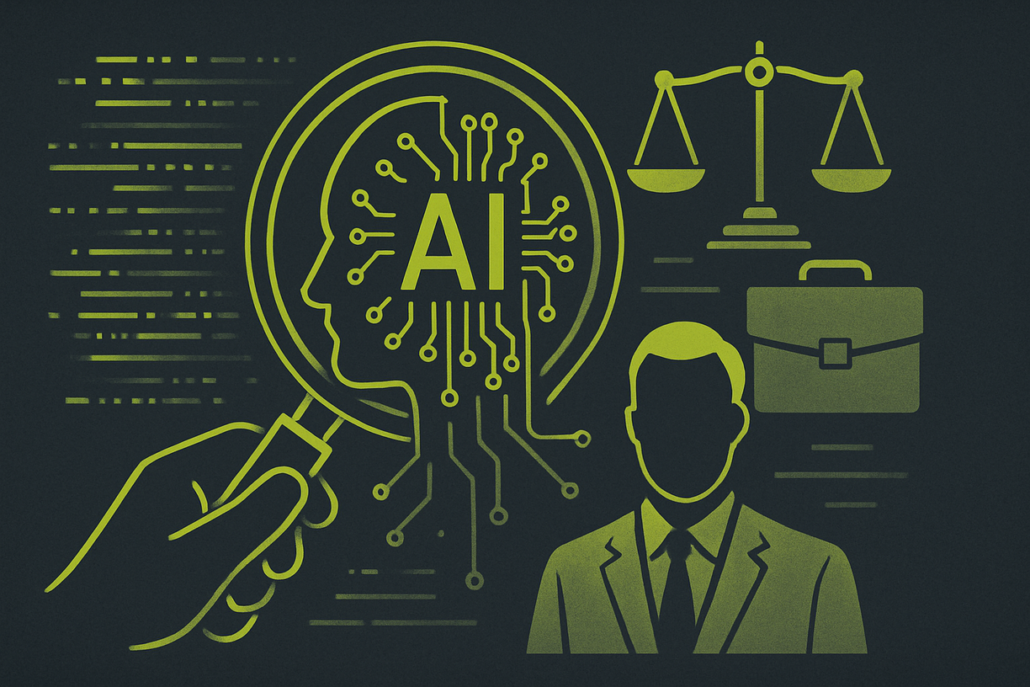
Leveraging AI in Private Investigations: A Game Changer for Claims Adjusters, Attorneys, and HR Professionals
The Evolving Landscape of Private Investigations
The image of a private investigator often conjures up scenes from classic noir films: a trench-coated figure lurking in shadows, conducting stakeouts, and relying on intuition and street smarts.
While the romanticized notion of the lone wolf detective still holds a certain allure, the reality of modern private investigations has evolved dramatically.
Today, the landscape is far more complex, driven by an increasingly digital world and the intricate challenges it presents to businesses, legal professionals, and human resources departments. The sheer volume of information, the sophistication of fraud schemes, and the complexities of workplace dynamics demand a new approach—one that transcends traditional methods and embraces cutting-edge technology.
In this rapidly changing environment, artificial intelligence (AI) has emerged not as a replacement for human investigators but as a powerful force multiplier. AI is revolutionizing how private investigators operate, offering unprecedented capabilities in data analysis, pattern recognition, and predictive insights.
This article will delve into how AI is transforming private investigations, making it a game-changer for claims adjusters seeking to combat fraud, attorneys building robust legal cases, and HR professionals navigating complex workplace issues.
By understanding the profound impact of AI, these professionals can leverage advanced investigative services to achieve greater efficiency, accuracy, and ultimately, more favorable outcomes. 
The Power of AI in Digital Forensics and Cyber Investigations
The digital realm, while offering unparalleled convenience, has also become a fertile ground for illicit activities. From sophisticated cyberattacks to intricate online scams and data breaches, the virtual world presents a myriad of challenges that traditional investigative methods often struggle to address.
This is where the power of AI in digital forensics and cyber investigations becomes indispensable. AI-driven tools are transforming the way investigators uncover, analyze, and interpret digital evidence, providing a critical advantage in the fight against cybercrime and other digitally-rooted offenses.
Uncovering Digital Breadcrumbs: How AI Analyzes Vast Amounts of Digital Data
Private investigators and forensic experts are often faced with an overwhelming volume of digital data, including emails, social media interactions, cloud storage contents, financial transactions, and communication logs. Manually sifting through this colossal amount of information is not only time-consuming but also prone to human error, making it easy to miss crucial connections or subtle indicators of illicit activity. AI, however, excels at processing and analyzing massive datasets with remarkable speed and accuracy.
AI algorithms can identify patterns, anomalies, and relationships within seemingly disparate pieces of information that would be virtually impossible for a human to detect.
For instance, AI can rapidly cross-reference communication records with financial transactions to flag suspicious activities or analyze social media profiles to map out complex networks of individuals involved in fraudulent schemes. This capability allows investigators to quickly pinpoint relevant data, reducing investigation times and increasing the likelihood of uncovering critical evidence.
Combating Cybercrime: AI’s Role in Tracking Cybercriminals, Data Breaches, and Online Scams
Cybercrime is a constantly evolving threat, with perpetrators employing increasingly sophisticated tactics. AI plays a pivotal role in combating these threats by enhancing the ability to track cybercriminals, investigate data breaches, and dismantle online scams.
AI-powered tools can analyze network traffic, identify malware signatures, and detect unusual login patterns, providing early warnings of potential cyberattacks.
In the aftermath of a data breach, AI can rapidly identify compromised data, trace the source of the breach, and help in the recovery process.
For online scams, AI can analyze communication patterns, identify fraudulent websites, and even predict the next moves of scammers based on historical data. This proactive and reactive capability of AI significantly strengthens the investigative response to cyber threats, protecting businesses and individuals from substantial financial and reputational damage.
Benefits for Legal Professionals: AI-Driven Evidence Collection and Analysis for Litigation
For attorneys, the ability to present compelling and legally sound digital evidence is paramount in litigation. AI-driven tools streamline the process of digital evidence collection, preservation, and analysis, ensuring that evidence is admissible in court.
AI can automatically identify and extract relevant documents, communications, and metadata from various digital sources, organizing them in a coherent and searchable format.
Furthermore, AI can perform sentiment analysis on communications, identify key individuals, and even reconstruct timelines of events, providing legal teams with a comprehensive understanding of the case. This not only saves significant time and resources during the discovery phase but also enhances the accuracy and reliability of the evidence presented, leading to stronger legal arguments and more favorable outcomes for clients.
AI-Enhanced Fraud Detection: A New Frontier for Claims Adjusters
Fraud is a pervasive and costly problem across numerous industries, particularly in insurance, workers’ compensation, and financial services. It drains resources, inflates costs, and ultimately impacts honest policyholders and businesses.
Traditional fraud detection methods, often reliant on manual review and rule-based systems, are increasingly overwhelmed by the sheer volume and sophistication of fraudulent schemes.
This is where AI-enhanced fraud detection emerges as a transformative solution, offering claims adjusters and risk managers unprecedented capabilities to identify, investigate, and prevent fraudulent activities.
Identifying Anomalies and Patterns: How AI Detects Fraudulent Claims
AI’s core strength lies in its ability to process and analyze vast quantities of data to identify subtle anomalies and complex patterns that are indicative of fraud. Unlike rule-based systems that can only flag known fraud indicators, AI, particularly machine learning algorithms, can learn from historical data to detect new and evolving fraud schemes.
For claims adjusters, this means AI can scrutinize claim submissions, medical records, financial transactions, and even social media activity to:
- Flag suspicious claims: AI can identify inconsistencies in claim narratives, unusual billing practices, or patterns of multiple claims from the same individuals or networks.
- Detect organized fraud rings: By analyzing connections between seemingly unrelated claims, AI can uncover sophisticated fraud rings operating across different policies or even different insurance carriers.
- Identify inflated claims: AI can compare claimed damages or medical treatments against industry benchmarks and historical data to pinpoint instances of overbilling or exaggerated injuries.
- Analyze unstructured data: AI-powered natural language processing (NLP) can extract valuable insights from free-text fields in claim forms, adjuster notes, and medical reports, identifying keywords or phrases commonly associated with fraudulent activity.
This advanced analytical capability allows claims adjusters to move beyond reactive fraud detection to a more proactive and predictive approach, significantly improving their ability to identify and mitigate financial losses.
Predictive Analytics for Risk Assessment: Using AI to Anticipate and Prevent Future Fraud
Beyond identifying existing fraud, AI empowers claims adjusters with predictive analytics, enabling them to assess risk and anticipate future fraudulent behavior.
By analyzing historical data on claims, policyholder behavior, and external factors, AI models can assign risk scores to new claims or policy applications.
This allows adjusters to prioritize their efforts, focusing resources on high-risk cases that warrant closer scrutiny.
Predictive AI can also identify potential vulnerabilities in existing processes that fraudsters might exploit, allowing organizations to implement preventative measures before losses occur.
For example, if a particular type of claim or geographic area shows a higher propensity for fraud based on AI analysis, adjusters can implement targeted interventions or enhanced verification processes.
This shift from reactive investigation to proactive prevention is a game-changer, allowing claims adjusters to minimize exposure to fraud and protect their organization’s bottom line.
Real-World Impact: Case Studies or Examples of AI’s Success in Fraud Prevention
The real-world impact of AI in fraud detection is already evident across the insurance and financial sectors. Leading insurance companies are leveraging AI to significantly reduce their fraud losses and improve operational efficiency.
For instance, AI systems have been deployed to analyze millions of workers’ compensation claims, identifying patterns of suspicious activity that human investigators might miss due to the sheer volume of data.
In one notable example, an insurance provider reported a substantial reduction in fraudulent payouts after implementing an AI-driven fraud detection system, leading to millions of dollars in savings.
Similarly, financial institutions are using AI to detect real-time anomalies in transactions, preventing credit card fraud and money laundering.
These successes underscore the tangible benefits of integrating AI into fraud detection strategies, demonstrating its capacity to deliver measurable improvements in efficiency, accuracy, and financial outcomes for claims adjusters and their organizations.
Revolutionizing Workplace Investigations for HR Professionals

The modern workplace is a dynamic and often complex environment, with evolving challenges that require HR professionals to be more vigilant and resourceful than ever.
The rise of remote work, the increasing importance of psychological safety, and the need for compliant and efficient hiring practices have all added new layers of complexity to workplace investigations.
In this context, AI is emerging as a powerful ally for HR professionals, offering innovative solutions to streamline investigations, mitigate risks, and foster a safer and more productive work environment.
Navigating Remote Work Challenges: AI’s Role in Investigating Misconduct, Time Theft, and Compliance Issues
The shift to remote and hybrid work models has brought numerous benefits, but it has also introduced new challenges for HR professionals.
Investigating misconduct, time theft, and compliance issues in a distributed workforce can be particularly difficult, as traditional methods of observation and supervision are no longer as effective.
AI-powered tools are helping to bridge this gap by providing HR professionals with the ability to:
- Monitor digital activity: AI can analyze company-provided devices and networks to identify patterns of behavior that may indicate misconduct, such as unauthorized access to sensitive data, inappropriate communication, or excessive non-work-related activity during work hours.
- Detect time theft: AI can analyze login/logout times, activity levels, and other digital footprints to identify potential instances of time theft or attendance fraud, providing objective data to support investigations.
- Ensure compliance: AI can monitor communications and activities to ensure compliance with company policies and industry regulations, flagging potential violations for further review.
By leveraging AI, HR professionals can conduct more thorough and objective investigations in remote work environments, ensuring fairness and consistency while protecting the organization from potential risks.
Ensuring Psychological Safety: How AI Can Assist in Sensitive Investigations While Maintaining Ethical Standards
Workplace investigations, particularly those involving harassment, discrimination, or bullying, are incredibly sensitive and can have a profound impact on the psychological safety of all involved. AI can assist HR professionals in navigating these delicate situations by:
- Providing objective data analysis: AI can analyze communication patterns, sentiment, and other data points to provide an objective basis for investigations, reducing the potential for human bias.
- Identifying patterns of behavior: AI can identify patterns of microaggressions or subtle forms of harassment that may be difficult to detect through manual review, allowing for early intervention.
- Anonymizing data: AI can be used to anonymize data during the initial stages of an investigation, protecting the identities of those involved and encouraging more open and honest reporting.
It is crucial to emphasize that AI is a tool to assist, not replace, the human element in these investigations. The final decisions and interactions should always be handled by trained HR professionals who can provide the necessary empathy, compassion, and human judgment.
Streamlining Background Checks: AI-Powered Tools for Efficient and Compliant Employee Screening
Hiring the right talent is crucial for any organization, and background checks are a critical part of the due diligence process. However, traditional background checks can be time-consuming and prone to inconsistencies. AI-powered tools are streamlining this process by:
- Automating data collection: AI can rapidly search and collate information from various public records, social media, and other sources, significantly reducing the time it takes to conduct a background check.
- Ensuring compliance: AI can be programmed to adhere to specific legal and regulatory requirements, such as “ban the box” and fair chance hiring laws, ensuring that the screening process is compliant and fair.
- Identifying red flags: AI can identify potential red flags or inconsistencies in a candidate’s history that may warrant further investigation, helping HR professionals make more informed hiring decisions.
By leveraging AI in the background screening process, HR professionals can improve efficiency, reduce the risk of non-compliance, and make more confident hiring decisions, ultimately contributing to a safer and more reliable workforce.
Cross-Industry Benefits: Why AI Matters to All Stakeholders
The integration of AI into private investigations is not merely a technological upgrade; it represents a fundamental shift that delivers profound benefits across various industries and for all stakeholders involved.
From enhancing operational efficiency to generating significant cost savings and navigating complex ethical landscapes, AI is proving to be an invaluable asset that extends its positive impact far beyond the investigative firm itself.
Therefore, understanding these overarching advantages is crucial for claims adjusters, attorneys, and HR professionals who seek to optimize their processes and achieve superior outcomes.
Efficiency and Accuracy: How AI Reduces Investigation Time and Improves Precision
One of the most immediate and tangible benefits of AI in private investigations is the dramatic improvement in both efficiency and accuracy.
Traditionally, investigations are labor-intensive, requiring countless hours of manual data collection, review, and analysis. This often leads to prolonged timelines and, at times, human errors or oversights due to the sheer volume of information.
However, AI-powered tools can process and analyze vast datasets—including financial records, communication logs, public records, and digital footprints—in a fraction of the time it would take a human investigator.
For instance, AI algorithms can quickly identify patterns, anomalies, and connections that might otherwise remain hidden, accelerating the investigative process. This enhanced speed means cases can be resolved more quickly, leading to faster claims processing for adjusters, quicker legal resolutions for attorneys, and more timely interventions for HR professionals.
Furthermore, AI’s ability to meticulously sift through data with unwavering precision significantly reduces the margin for error, ensuring that the evidence gathered is not only comprehensive but also highly accurate and reliable.
Cost Savings and ROI: The Financial Advantages of AI-Driven Investigations
Beyond efficiency improvements, AI-driven investigations offer substantial financial advantages and a compelling return on investment (ROI). The reduction in manual labor translates directly into lower operational costs.
For example, tasks such as data entry, document review, and initial screening, which traditionally consume significant human resources, can be largely automated by AI. This allows investigative firms to allocate their human experts to more complex, strategic aspects of a case, maximizing their value.
For clients like insurance companies, legal firms, and corporations, this means reduced investigative fees and, more importantly, minimized losses due to fraud or unresolved issues.
By enabling faster fraud detection, AI can prevent millions of dollars in fraudulent payouts, directly impacting an insurer’s profitability. Similarly, swift resolution of legal disputes or workplace misconduct cases can prevent prolonged litigation and associated costs.
Consequently, investing in AI-enhanced investigative services is not just about adopting new technology; it is a strategic financial decision that yields measurable economic benefits.
Ethical Considerations and Data Privacy: Addressing Concerns and Ensuring Responsible AI Deployment
As AI becomes more integrated into sensitive fields like private investigations, addressing ethical considerations and ensuring robust data privacy measures are paramount.
Concerns about bias in AI algorithms, the potential for misuse of data, and the implications for individual privacy are valid and must be proactively managed.
Reputable investigative firms leveraging AI understand these challenges and commit to responsible AI deployment. This involves:
- Transparency: Clearly communicating how AI tools are used and their limitations.
- Human Oversight: Ensuring that AI-generated insights are always reviewed and validated by experienced human investigators who apply critical thinking and ethical judgment.
- Data Security: Implementing stringent cybersecurity protocols and adhering to all relevant data protection regulations (e.g., GDPR, CCPA) to safeguard sensitive information.
- Bias Mitigation: Actively working to identify and mitigate potential biases in AI algorithms to ensure fair and equitable outcomes, particularly in areas like background checks and workplace investigations.
By prioritizing ethical guidelines and data privacy, AI can be deployed as a powerful, responsible tool that upholds legal standards and maintains public trust, thereby benefiting all stakeholders by ensuring investigations are conducted with integrity and accountability.
Gravitas Investigations: Leading the Way with AI-Powered Solutions
In a world where the complexities of investigations continue to escalate, Gravitas Investigations stands at the forefront, embracing the transformative power of Artificial Intelligence to deliver unparalleled investigative services.
We understand that for claims adjusters, attorneys, and HR professionals, the need for accurate, efficient, and legally sound investigations has never been greater.
Our commitment to leveraging cutting-edge AI technology is not just about staying current; it’s about setting new standards for excellence in the private investigation industry.
At Gravitas Investigations, we believe that the most effective solutions arise from a synergistic blend of advanced technology and profound human expertise. Our team of seasoned private investigators, with their deep understanding of legal nuances, human behavior, and investigative methodologies, works hand-in-hand with sophisticated AI tools.
This integrated approach allows us to:
- Accelerate Data Analysis: Our AI systems rapidly process and analyze vast quantities of data, from digital footprints to complex financial records, identifying critical patterns and insights far beyond human capacity alone.
- Enhance Fraud Detection: We utilize AI-powered analytics to pinpoint suspicious activities and predict potential fraud schemes with remarkable accuracy, providing claims adjusters with the intelligence needed to mitigate losses effectively.
- Optimize Workplace Investigations: For HR professionals, our AI-assisted investigations ensure thorough, unbiased, and discreet handling of sensitive workplace issues, from misconduct to compliance violations, even in remote environments.
- Strengthen Legal Cases: Attorneys benefit from our AI-driven digital forensics capabilities, which meticulously collect, preserve, and analyze electronic evidence, building robust cases with irrefutable data.
Gravitas Investigations is not just an investigative firm; we are your strategic partner in navigating the intricate landscape of modern investigations.
Our AI-powered solutions are designed to provide you with actionable intelligence, reduce your risks, and deliver the clarity you need to make informed decisions.
We are dedicated to providing services that are not only technologically advanced but also uphold the highest standards of ethics, professionalism, and client confidentiality.
Whether you are a claims adjuster grappling with complex fraud cases, an attorney seeking irrefutable digital evidence, or an HR professional addressing sensitive workplace matters, Gravitas Investigations is equipped to provide the precise, efficient, and trustworthy investigative support you require.
Discover the Gravitas difference—where human insight meets artificial intelligence to uncover the truth.
Conclusion: The Future is Now
The private investigation industry is undergoing a profound transformation, driven by the rapid advancements in Artificial Intelligence. The traditional image of the solitary detective is being augmented by the power of AI, creating a new era of investigative capabilities that are faster, more accurate, and more comprehensive than ever before.
For professionals in insurance, law, and human resources, this evolution is not just a trend; it is a critical development that offers unprecedented opportunities to enhance their operations, mitigate risks, and achieve more favorable outcomes.
AI in private investigations is no longer a futuristic concept; it is a present-day reality that is reshaping how fraud is detected, how digital evidence is uncovered, and how workplace issues are resolved.
By embracing AI-powered solutions, claims adjusters can more effectively combat fraudulent claims, attorneys can build stronger cases with robust digital forensics, and HR professionals can navigate complex workplace investigations with greater efficiency and compliance.
The synergy between human expertise and artificial intelligence is proving to be the most effective approach, ensuring that the nuanced understanding and ethical judgment of experienced investigators are combined with the analytical power and speed of AI.
As the digital world continues to expand and the challenges within it become more intricate, the role of AI-enhanced private investigations will only grow in importance. Gravitas Investigations is proud to be at the forefront of this evolution, offering sophisticated, ethical, and results-driven investigative services that leverage the best of both human and artificial intelligence.
The future of investigations is here, and it is intelligent, precise, and profoundly impactful.

