
10 Red Flags That Trigger Workers’ Compensation Surveillance Investigations
When Does Workers’ Compensation Surveillance Typically Begin?
Workers’ compensation fraud is a significant financial drain on businesses, with estimates suggesting it costs insurers between $35 billion and $44 billion annually.
Consequently, insurance carriers, third-party administrators, and employers are increasingly vigilant in verifying the legitimacy of claims.
One of the most effective tools in their arsenal is surveillance. But when does the clock start on surveillance? Contrary to popular belief, it is not an arbitrary process.
Surveillance is typically initiated when a claim exhibits specific indicators—or red flags—that suggest potential misrepresentation or fraud.
Understanding these signs of workers’ comp fraud is the first step for claims adjusters, HR professionals, and risk managers to manage claims and mitigate losses proactively.
10 Red Flags That Trigger Workers’ Compensation Surveillance
While every claim is unique, experienced investigators recognize patterns that often signal fraudulent activity.
The presence of two or more of these red flags in a single claim significantly increases the likelihood of it being fraudulent, prompting a more in-depth investigation that often includes surveillance.
1. The “Monday Morning” Injury
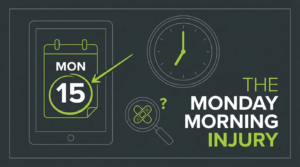 An injury reported first thing on a Monday morning is a classic red flag. This timing is suspicious because the injury may have occurred over the weekend during non-work-related activities. The employee then attempts to pass it off as a workplace incident to receive benefits. Similarly, an injury that occurs late on a Friday but isn’t reported until Monday raises suspicion, as it suggests the employee may have waited to see if the injury would resolve on its own before filing a claim.
2. Vague or Conflicting Accounts of the Incident
Inconsistencies in the claimant’s story are a major cause for concern. If the employee’s description of the accident changes over time or conflicts with the initial report of injury or medical records, it warrants a closer look. For example, a claimant might initially state they fell from a low step, but later tell a doctor they fell from a significant height. Such discrepancies suggest the claimant may be fabricating or exaggerating the circumstances of the injury.
3. No Witnesses to the Accident
While many legitimate workplace accidents occur without witnesses, an unwitnessed incident combined with other red flags can be suspicious. This is especially true if the employee’s description of the event does not logically support the cause of injury. The absence of witnesses makes it difficult to verify the claimant’s account, which is why it often triggers further investigation to corroborate the claim through other means.
4. Delayed Reporting of the Injury
A significant delay between the time of the alleged injury and when it is officially reported is another red flag. Unless there is a reasonable explanation for the delay, it raises questions about the injury’s legitimacy. A prompt report is expected for any significant workplace injury. A delay could indicate that the claimant was “shopping” for a doctor who would support their claim or that the injury is not as severe as alleged.
5. A History of Previous Claims
A claimant with a history of multiple workers’ compensation claims, especially if they were suspicious or litigated, is more likely to be flagged for surveillance. While a history of claims is not proof of fraud, it does establish a pattern of behavior that can indicate a tendency to exploit the system. Investigators will often conduct a hospital canvass to determine if a claimant has a history of filing dubious claims.
6. The Claimant is Difficult to Reach
An allegedly disabled employee who is consistently difficult to reach at home can be a red flag. While there may be legitimate reasons for their absence, such as medical appointments, a pattern of unresponsiveness can suggest that the claimant is not as incapacitated as they claim to be. They may be avoiding contact because they are working another job or engaging in activities that are inconsistent with their reported injuries.
7. Refusal of Medical Treatment or Diagnostic Procedures
 A claimant who refuses a reasonable and necessary diagnostic procedure, such as an MRI or an independent medical examination (IME), raises suspicion. These procedures are essential for confirming the nature and extent of an injury. A refusal may indicate that the claimant fears the test will not support their claims of a severe injury, or that it will reveal a pre-existing condition.
8. Suspicious Medical Providers or Legal Counsel
Experienced claims adjusters and investigators are often aware of medical providers and attorneys who have a reputation for handling a high volume of suspicious claims. If a claimant is using a doctor or lawyer known for facilitating fraudulent claims, it is a significant red flag. These “fraud mills” often involve cross-referral schemes between unethical medical and legal professionals.
9. Changes in Employment Status
An injury reported immediately before or after a significant change in employment status is another red flag. This includes layoffs, terminations, the end of a large project, or the conclusion of seasonal work. In these situations, the workers’ compensation claim may be a retaliatory action or an attempt to secure income after a job loss.
10. Social Media Activity Inconsistent with the Injury
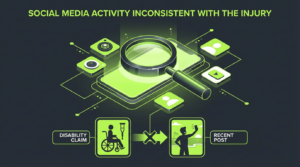 In the digital age, social media has become a valuable tool for investigators. If a claimant’s social media profiles contain photos or posts showing them engaging in activities that contradict their physical limitations, it is a major red flag. For example, a claimant with a severe back injury posting pictures of themselves on a ski trip would immediately trigger a surveillance investigation.
How Surveillance Investigations Work
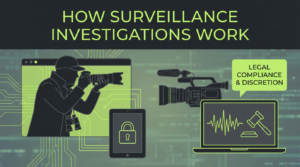 Once enough red flags are present, a licensed private investigator may be retained to conduct surveillance.
The goal is to obtain objective evidence of the claimant’s daily activities and physical capabilities.
This is typically done through discreet video documentation.
Investigators operate within strict legal and ethical boundaries to ensure that the evidence collected is admissible in court.
The evidence gathered can be used to contest a fraudulent claim, saving the employer and insurer high costs.
Legal and Ethical Considerations
It is crucial that all surveillance activities are conducted in a legal and ethical manner. Investigators must respect the claimant’s reasonable expectation of privacy. For example, they cannot film a claimant inside their home. However, any activities conducted in public view are generally permissible to document. Gravitas Investigations adheres to all state and federal laws governing surveillance, ensuring that our clients are protected from any legal challenges.
The ROI of Professional Surveillance
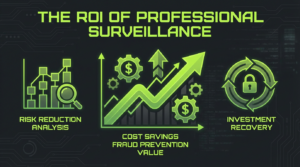 The cost of a fraudulent workers’ compensation claim can be substantial, including medical expenses, indemnity payments, and legal fees. The cost of a surveillance investigation is a fraction of these potential losses. By investing in professional surveillance, businesses can effectively combat fraud, reduce their insurance premiums, and protect their bottom line. The return on investment for a successful surveillance investigation is often substantial.
If you have a claim that is exhibiting multiple red flags, it may be time to consider a professional surveillance investigation. Contact Gravitas Investigations today for a confidential consultation to discuss how we can help you mitigate your risk and protect your business from fraudulent claims.

