
How Insurance Adjusters Can Spot Workers’ Comp Fraud on Social Media: 10 Red Flags You’re Missing
The Multi-Billion Dollar Problem of Workers’ Compensation Fraud
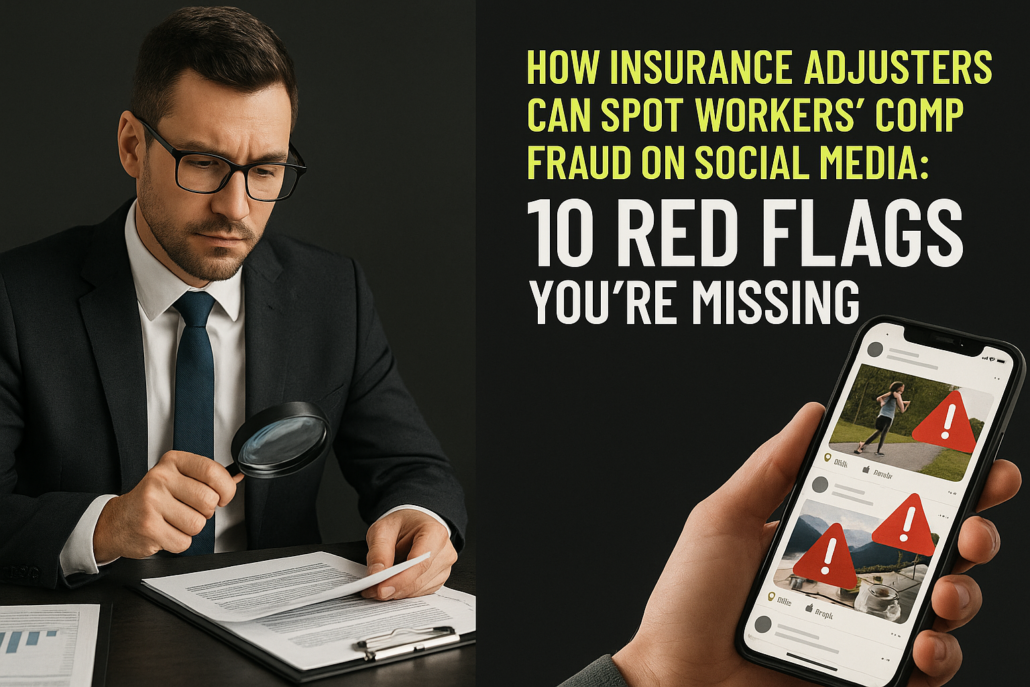
 Workers’ compensation fraud is a pervasive issue that silently drains billions of dollars from the U.S. economy each year. The National Insurance Crime Bureau (NICB) estimates that workers’ compensation fraud costs insurers and employers a staggering $30 billion annually [1]. This financial burden translates into higher premiums for honest businesses and can strain the resources of even the most diligent insurance carriers. For claims adjusters on the front lines, the pressure to identify and mitigate these fraudulent claims is immense. In today’s digital world, the battlefield has shifted from traditional surveillance to the vast, publicly accessible realm of social media.
Historically, investigating suspicious claims involved costly and time-consuming physical surveillance. While still a valuable tool, the proliferation of social media platforms has provided a new, and often more revealing, window into a claimant’s daily life. A 2022 study by the Coalition Against Insurance Fraud found that a significant percentage of insurance professionals now use social media as a primary tool for fraud detection [2]. This shift reflects a broader trend in the private investigation industry, where digital forensics and online intelligence gathering have become indispensable.
Why Social Media is a Goldmine for Workers’ Comp Fraud Evidence
The very nature of social media—the impulse to share life events, activities, and opinions—makes it a fertile ground for uncovering fraudulent claims. Individuals who would be cautious in a formal interview or under direct observation often let their guard down online. This can lead to the unintentional disclosure of evidence that directly contradicts their injury claims. The types of evidence that can be found on social media are as varied as the platforms themselves, ranging from incriminating photos and videos to revealing status updates and location check-ins.
For an insurance adjuster, this digital footprint can be the key to unlocking the truth behind a suspicious claim. A claimant who asserts they are unable to lift more than ten pounds may be tagged in a friend’s photo album from a recent bowling tournament. An employee on leave for a debilitating back injury might post a video of themselves completing a strenuous home renovation project. These are not hypothetical scenarios; they are the real-world examples that private investigators encounter daily. The challenge for adjusters is knowing what to look for and how to interpret the digital breadcrumbs that can lead to a successful fraud investigation.
10 Critical Red Flags of Workers’ Comp Fraud on Social Media
Navigating the digital landscape for signs of fraud requires a trained eye and a strategic approach. Here are ten critical red flags that every insurance adjuster should be aware of when reviewing a claimant’s social media presence:
1. The “Miraculous Recovery” Post
This is one of the most common and blatant forms of social media evidence. The claimant, who is supposedly incapacitated by their work-related injury, suddenly appears in photos or videos engaging in activities that are clearly inconsistent with their medical restrictions. This could be anything from playing a sport to dancing at a wedding. These posts are often accompanied by celebratory captions that further undermine the legitimacy of their claim.
2. The “Side Hustle” Revelation
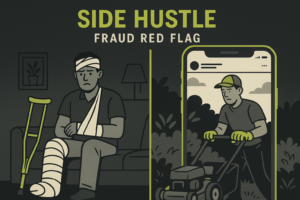
Many fraudulent claimants use their time off to work a second job, often for cash. Social media can be a treasure trove of evidence for this type of fraud. Look for posts advertising a side business, such as a landscaping service or a home-based bakery. Friends and family may also inadvertently expose the fraud by posting about the claimant’s work activities.
3. The “Adventure Travel” Album
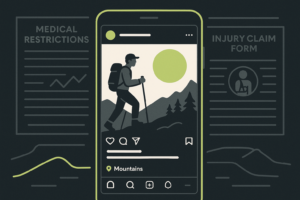 A claimant who is supposedly too injured to work may not be too injured to travel. Social media is often the first place people share their vacation photos. Look for photo albums from recent trips, especially those that involve physically demanding activities like hiking, skiing, or swimming. Geotagged posts can also provide a timeline of the claimant’s travels.
4. The “Gym Rat” Check-in
For many people, the gym is a regular part of their routine, and they are proud to share their fitness journey online. A claimant who is supposedly undergoing physical therapy for a shoulder injury may post a video of themselves lifting heavy weights at the gym. Location check-ins at fitness centers can also be a red flag that warrants further investigation.
5. The “Inconsistent Injury” Narrative
Fraudulent claimants often have difficulty keeping their stories straight. Their social media posts may contain details that contradict the information they provided in their official claim. For example, a claimant who reported a right-arm injury may be seen in a photo using their right arm to perform a task that would be impossible with their alleged injury.
6. The “Tag, You’re It!” Friend Post
Even if a claimant has locked down their own social media profiles, their friends and family may not be as cautious. A friend might tag the claimant in a photo or post that reveals their true activity level. This is why a thorough social media investigation should always include a review of the claimant’s close connections.
7. The “For Sale” Marketplace Listing
Online marketplaces like Facebook Marketplace can provide valuable clues. A claimant who is supposedly unable to work due to a back injury may be selling heavy furniture or other items that would require significant physical effort to move. The descriptions and photos in these listings can be very revealing.
8. The “Eventbrite” Socialite
Platforms like Eventbrite and Meetup can provide a detailed record of a claimant’s social activities. A claimant who is supposedly homebound due to their injury may have a public profile that shows they have been attending concerts, festivals, and other events. This can be powerful evidence to dispute their claim.
9. The “GoFundMe” for a Different Cause
Crowdfunding platforms can be a source of information, but not always in the way you might expect. A claimant may have a GoFundMe campaign for their work-related injury, but a search of their name might reveal another campaign for a completely different purpose, such as a mission trip or a sports competition. This can raise questions about the true nature of their financial needs.
10. The “Sudden Privacy” Lockdown
While not direct evidence of fraud, a claimant who suddenly makes all of their social media profiles private after filing a claim can be a red flag. This may indicate that they have something to hide. While this alone is not enough to deny a claim, it may be a sign that a more in-depth investigation is warranted.
Legal and Ethical Considerations for Social Media Surveillance
While social media is a powerful tool for fraud detection, it is essential to navigate the legal and ethical landscape with care. The admissibility of social media evidence in court is a complex and evolving area of law. In general, evidence gathered from public social media profiles is admissible, provided it can be properly authenticated. The American Bar Association has published guidelines on the discovery and preservation of social media evidence that can be a valuable resource for legal professionals [3].
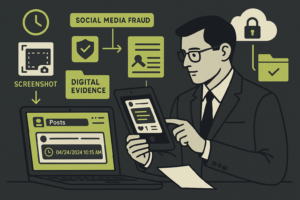 It is crucial to ensure that all investigative activities are conducted in a legal and ethical manner. This means respecting the claimant’s privacy rights and only accessing information that is publicly available. Attempting to gain access to private profiles through deceptive means can have serious legal consequences. This is why it is often advisable to partner with a professional private investigator who is well-versed in the legal and ethical considerations of social media surveillance.
From Red Flag to Actionable Evidence: Partnering with a Private Investigator
 Identifying a red flag on social media is just the first step. To build a strong case, you need to be able to collect, preserve, and present the evidence in a way that will stand up in court. This is where a professional private investigator can be an invaluable partner. A firm like Gravitas Investigations has the expertise and resources to conduct a thorough and legally compliant social media investigation.
Our investigators are trained to use advanced techniques to uncover and document digital evidence. We understand the rules of evidence and know how to preserve the chain of custody to ensure that the information we gather is admissible in court. We can provide you with a detailed report that includes all of the relevant evidence, as well as a professional analysis of our findings. This can give you the confidence you need to make an informed decision about a suspicious claim.
Conclusion: Stay Vigilant, Stay Ahead of Fraud
 In the fight against workers’ compensation fraud, social media has become an indispensable tool. By learning to spot the red flags and partnering with a professional private investigator, insurance adjusters can level the playing field and protect their organizations from fraudulent claims. The digital world is constantly evolving, and so are the methods of those who seek to exploit the system. By staying vigilant and staying ahead of the curve, you can help to ensure that workers’ compensation benefits go to those who truly need them.
If you suspect workers’ compensation fraud, don’t wait. Contact Gravitas Investigations today for a confidential consultation.

